The Indonesian Localization Playbook: A Decision Framework for High-Growth Product Teams
Scale your product in Indonesia with confidence. Explore our Baku vs. Gaul trade-off table, regional ROI maps, and a developer-centric framework to eliminate context drift in localization workflows.

Introduction: The $130 Billion Paradox
Indonesia represents the largest digital economy in Southeast Asia, projected to reach a GMV of $130 billion by 2025. However, for global product teams, this massive opportunity often turns into a localization nightmare. A common misconception among Silicon Valley or European product managers is that 'Bahasa Indonesia' is a monolithic language. In reality, the linguistic distance between a banking app used in Jakarta and a social commerce platform targeting Tier-2 cities like Medan is vast. This guide provides a decision-first framework to navigate the nuances of the Indonesian market, ensuring your product resonates locally without sacrificing global engineering velocity.
The 'Baku vs. Gaul' Trade-off: Selecting Your Linguistic North Star
One of the most critical decisions a localization manager must make is where the product sits on the spectrum between Bahasa Baku (Standard/Formal Indonesian) and Bahasa Gaul (Colloquial/Slang). Choosing the wrong tone doesn't just feel 'off'—it actively erodes user trust. For instance, a fintech app using Gen-Z slang might appear unreliable to a business owner in Surabaya, while a social app using hyper-formal PUEBI standards will feel robotic and alienating to teenagers in Jakarta.
Read Also: Bahasa Gaul 2025: Panduan Lengkap Tren, Makna, dan Evolusi Komunikasi Digital
The Trade-off Table: Verticals vs. Tone
Below is a strategic matrix developed by the Xerpihan localization team to guide your initial tone-of-voice settings:
- Fintech & Banking: 90% Baku / 10% Gaul. Focus on trust, security, and clarity. Use formal pronouns like 'Anda' instead of 'Kamu'.
- Social Media & Entertainment: 20% Baku / 80% Gaul. Focus on relatability, trend-responsiveness, and high engagement.
- Enterprise SaaS: 70% Baku / 30% Gaul. Professional yet modern. A balance of 'Standard' for functionality and 'Semi-formal' for onboarding.
- E-commerce: 50% Baku / 50% Gaul. Dynamic. Formal for checkout/legal, but casual for promotional banners and push notifications.
Understanding these differences is vital to avoid high bounce rates during the first-time user experience. For a deeper dive into the technical standards of formal Indonesian, check our guide on Mengenal Apa Itu PUEBI: Panduan Lengkap Penulisan Ejaan yang Benar.
3 Fatal Indonesian Failure Scenarios: Real-World Post-Mortems
Localization is not just translation; it is cultural risk management. Here are three scenarios where global apps failed in the Indonesian market due to a lack of local context.
1. The 'Bebas' Blunder in Fintech
A global neo-bank expanded to Indonesia and used the word 'Bebas' for its zero-fee transaction feature. In many contexts, 'Bebas' means 'Free' (as in 'Free of charge'). However, without proper context in the UI, many users in rural areas interpreted it as 'Bebas Aturan' (Unregulated/Lawless). This led to a 14% drop in trust scores because users feared the transactions weren't monitored by the OJK (Indonesian Financial Services Authority). Lesson: Use 'Bebas Biaya' or 'Gratis' for clarity.
2. The 'Simpan' vs. 'Simpan' Ambiguity
In a popular productivity app, the English button 'Save' was translated as 'Simpan'. While correct, the app also used 'Simpan' for 'Archive' in a different sub-menu. In Indonesian, 'Simpan' can mean both 'to store' and 'to save for later'. Users were accidentally archiving documents they meant to save to the cloud, leading to a surge in support tickets. Lesson: Distinguish between 'Simpan' (Save) and 'Arsip' (Archive) to prevent UX friction.
3. The 'Lanjut' Fatigue
Many apps use 'Lanjut' as a translation for 'Continue' or 'Next'. However, 'Lanjut' can feel abrupt or even dismissive in certain flows. High-growth local startups like Gojek often use 'Lanjutkan' or 'Yuk, Mulai' (Let's Start) to create a more conversational and inviting flow. Using a flat machine translation of 'Next' often results in a 'robotic' feel that reduces conversion rates by up to 8% in onboarding funnels.
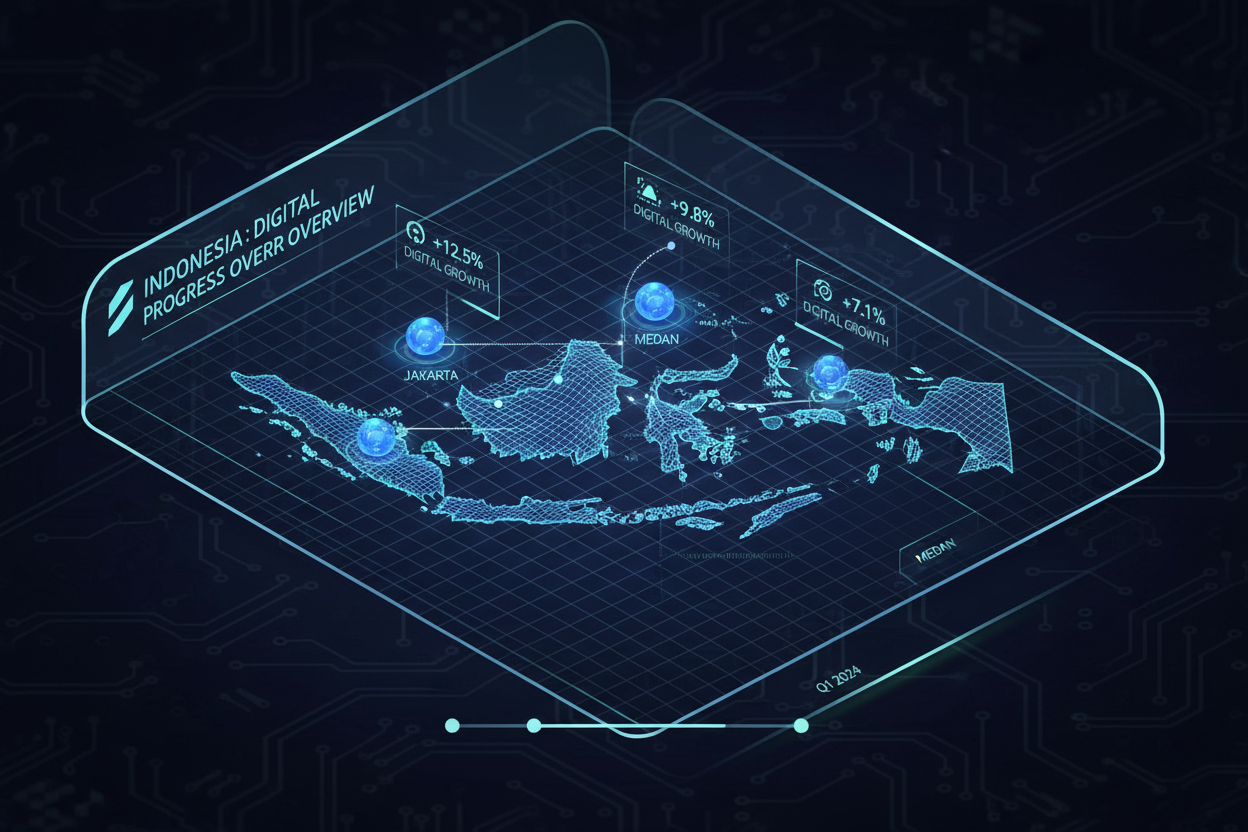
The Regional ROI Map: Jakarta vs. Surabaya vs. Medan
According to Proprietary Xerpihan Market Analysis (2025), localization effectiveness is not uniform across the archipelago. The ROI of deep localization varies significantly by region. Digital maturity in Jakarta is high, but the 'novelty' of localized slang is lower. Conversely, in Medan or Makassar, users show a 22% higher retention rate when the app uses regional idioms or specific cultural references compared to a 'Generic Jakarta' dialect.
Market Segmentation and Retention Benchmarks
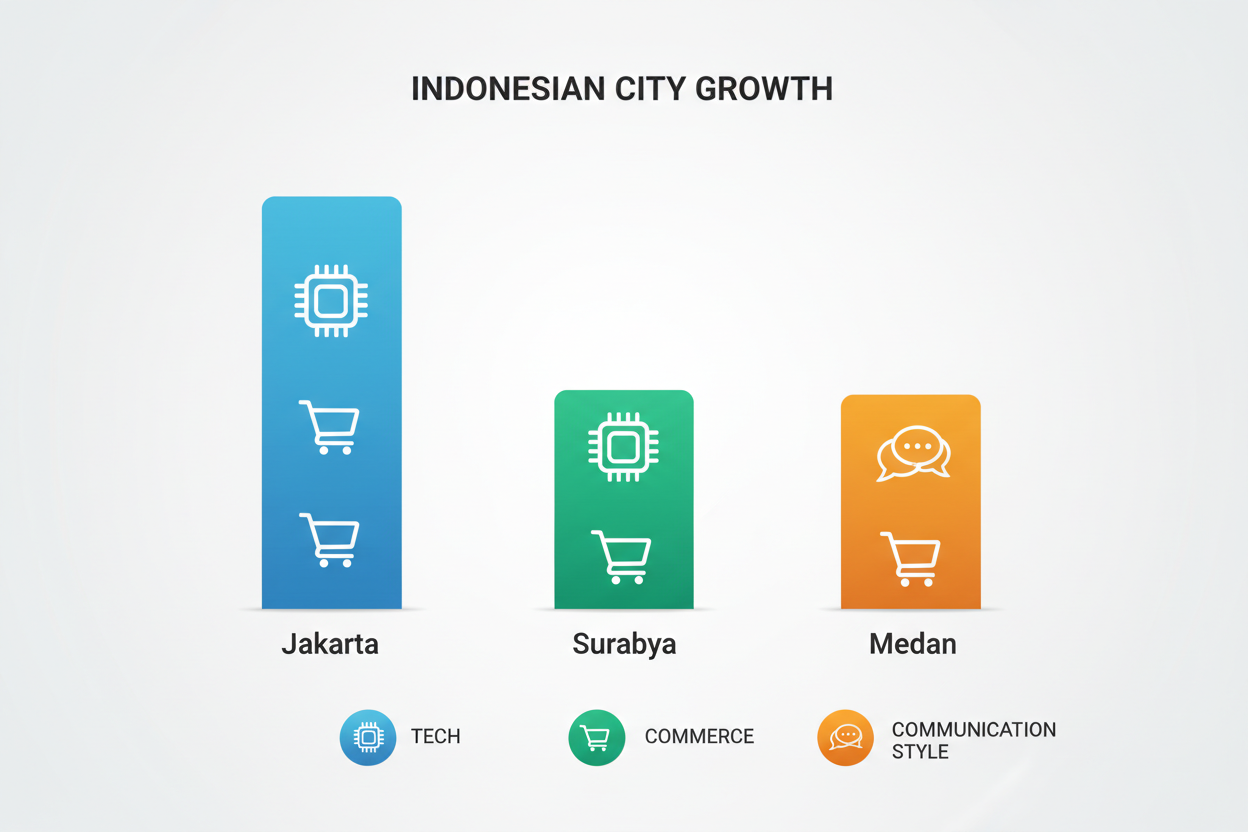
- Jakarta (The Efficiency Hub): Users prioritize speed. Over-localization can be seen as a distraction. Retention is driven by UX performance.
- Surabaya (The Commercial Hybrid): A mix of formal business Indonesian and local 'Suroboyoan' spirit. Moderate gains from cultural nuance.
- Medan (The Direct Communicator): Users respond well to direct, punchy, and transparent copy. High sensitivity to 'corporate speak' which feels untrustworthy.
For more on how to measure these metrics, see our guide on Localization Market Intelligence: Strategi Mengukur ROI Lokalisasi di Indonesia.
Developer-to-Translator Sync: Managing 'Context Drift'
The most common technical failure in localization is Context Drift. This happens when a translator receives a list of isolated strings in a spreadsheet or a .json file without seeing the UI. Because Indonesian is a context-heavy language with no grammatical gender but complex prefix/suffix systems, a single word can have multiple meanings.
The GitHub-Figma-CAT Workflow
To eliminate context drift, high-growth teams should implement the following framework:
- Figma Contextual Annotations: Designers must label text layers with 'Context Tags' (e.g., [Button], [Header], [Error_Message]).
- String Keys with Metadata: Instead of , use
"btn_save": "Save". The key itself provides context."onboarding_payment_save_cta": "Save" - In-Context Editing: Use tools like Phrase or Lokalise that allow translators to see the Figma mockup while translating.
- Linguistic QA (LQA): Never deploy strings directly. Run an LQA cycle on a staging environment to check for character overflows—Indonesian words are often 20-30% longer than English equivalents.
Implementing these workflows is part of the broader evolution in Workflow Post-Editing Machine Translation (PEMT) Bahasa Indonesia, where human oversight ensures the final polish.
Future Outlook 2026-2030: The Rise of Hyper-Regional AI
As we move toward 2030, the localization landscape in Indonesia will shift from 'General Indonesian' to 'Hyper-Regional Personalization'. Advances in LLMs will allow apps to switch dialects dynamically. A user in Yogyakarta may interact with a version of the app that uses Javanese linguistic structures (even if the words are Indonesian) to build deeper rapport. Teams that master the 'Decision Framework' today will be the ones capable of leveraging these AI advancements tomorrow. We recommend following the Tren Layanan Bahasa Berbasis AI 2026 to stay ahead of these shifts.
The Role of Human-in-the-Loop
Despite the rise of AI, the 'Human-in-the-Loop' (HITL) model remains non-negotiable for high-risk industries. In legal, medical, and financial tech, a 0.1% translation error can lead to regulatory fines or loss of life. Professional services like Xerpihan's translation services provide that critical layer of human validation that AI cannot yet replicate in the complex Indonesian sociolinguistic landscape.
Conclusion: Decisions Over Definitions
Localization is not about finding the 'right word' in a dictionary; it is about making the 'right decision' for your user. By applying the Baku vs. Gaul matrix, avoiding the fatal pitfalls of context drift, and calculating your regional ROI, you transform localization from a cost center into a growth engine. Start by auditing your current Indonesian strings—do they sound like a product, or do they sound like a partner?